تخطي إلى المحتوى الرئيسي
١٨ جمادى الآخرة ١٤٤٨
٢٨ نوفمبر ٢٠٢٦ م
مواقيت الصلاة
Search
Close this search box

Arabian Oryx Sanctuary

Wilayat of Haima - Al Wusta Governorate

Home of the Arabian oryx, and a centre for conserving wildlife and protecting the natural landmarks of Al Wusta Governorate

About the sanctuary

The Arabian Oryx Sanctuary in Al Wusta Governorate was declared by Royal Decree No. (4/1994), amended by Royal Decree No. (11/2007), to sustain nature and wildlife together with their ecological, heritage and cultural systems.

The sanctuary is a centre and a global legacy of the Sultanate of Oman's commitment to conserving wildlife and protecting the natural landmarks of Al Wusta Governorate at the highest level of protection.

The sanctuary has varied terrain of plains, plateaus and depressions, and the Huqf Depression is one of its most important natural landmarks.

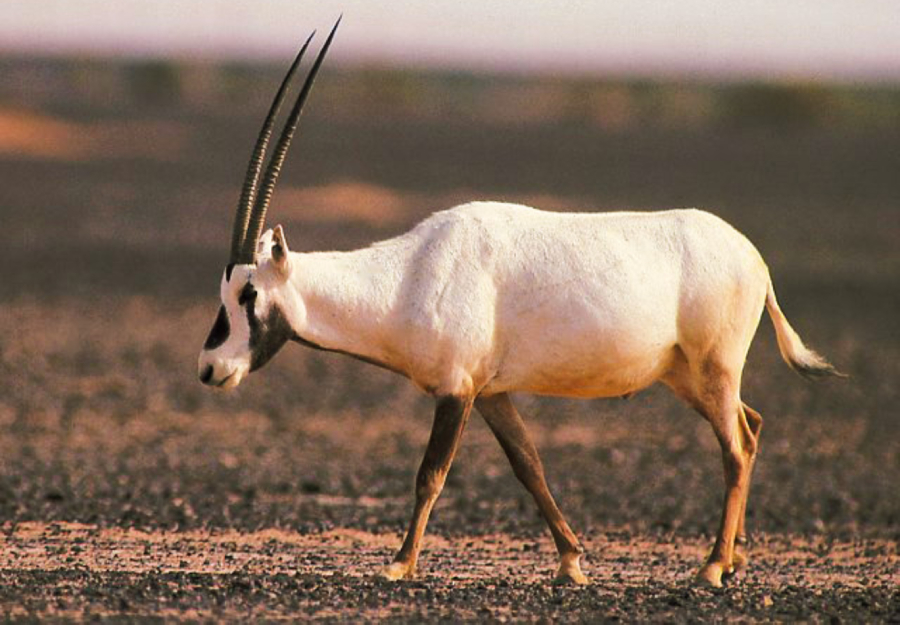
مها عربي يمشي في السهل

Timeline of the Arabian oryx reintroduction

The stages of returning the Arabian oryx to the Omani wild, as documented by the Environment Authority.

  1. 1962

    A group of Arabian oryx was captured in the Omani wild to found the nucleus of the World Herd.

  2. 1972

    The last Arabian oryx in the Omani desert died.

  3. 1974

    Royal orders were issued to reintroduce the Arabian oryx to the Omani wild.

  4. 1980

    The first group of oryx arrived in Jiddat al-Harasis.

  5. 1982

    The first herd of Arabian oryx, ten animals, was released into the Omani wild.

  6. 1995

    The number of Arabian oryx in the wild reached more than 450.

  7. 1996-1998

    The number of Arabian oryx fell to 39 females in captivity.

  8. 2024

    Thanks to dedicated efforts, the Arabian oryx has recovered, numbering more than 1,000 animals.
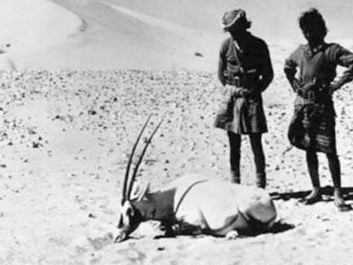
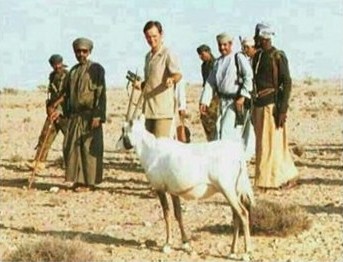
صورة قديمة بالأبيض والأسود لمها عربي جاثم على الرمال يقف بجانبه رجلان
An oryx caught during a rescue operation in 1962. These animals were the nucleus of what was called the "World Herd".
رجال يقفون حول مها عربي في الصحراء

Source: Environment Authority

The sanctuary's natural environment

Climate

Because of its location, the Arabian Oryx Sanctuary is a desert area where rain is rare. Daytime temperatures are high, especially in the summer months, when they can reach 50 °C in the shade. In winter they can reach 24 °C, and the lowest temperature recorded in Al Wusta Governorate is 6 °C, in January.

The Huqf geological depression

The Huqf Depression lies between the Huqf escarpment and the sea, in the south-east of the sanctuary. Most of it is a salt plain known as sabkha, with rock outcrops from every geological age and the oldest rocks in the Sultanate, which makes it an area of special interest to geologists. The Huqf escarpment extends over more than 130 square kilometres.

Water resources

Water in the sanctuary comes from natural oases fed by groundwater, from natural springs and from wells. These sources are essential for wildlife and for local people. Most oases have fairly salty water, yet they are an essential resource for many kinds of wild animals, and aquatic creatures adapted to this water live in them, such as small fish, aquatic shells and some insects.

Wildlife and vegetation

Biodiversity

The sanctuary is home to many wild animals, such as the Arabian oryx, gazelles, foxes, wild cats and jerboas. It is also home to many resident and migratory birds, such as the houbara bustard, the stone-curlew, the grey heron and the Indian pond heron, and to resident birds of high environmental value, the most important being the sandgrouse, the sand partridge and the golden eagle.

Reptiles

About 12 species of land reptiles have been recorded in the sanctuary, led by the Oman spiny-tailed lizard, the Egyptian spiny-tailed lizard and the desert monitor, along with many snakes, the most important being the highly venomous horned viper and the saw-scaled viper.

Vegetation

The sanctuary's vegetation is varied, with more than 120 species of wild plants. Samr (acacia) and ghaf trees are its most important trees, giving shade and food to wild animals.

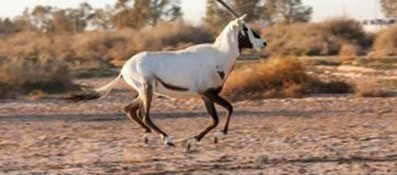
مها عربي يعدو في البراري
غزال جاثم على الرمال بين أغصان يابسة
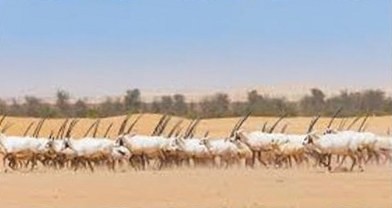
قطيع من المها العربية يسير في الصحراء

Wildlife breeding centre

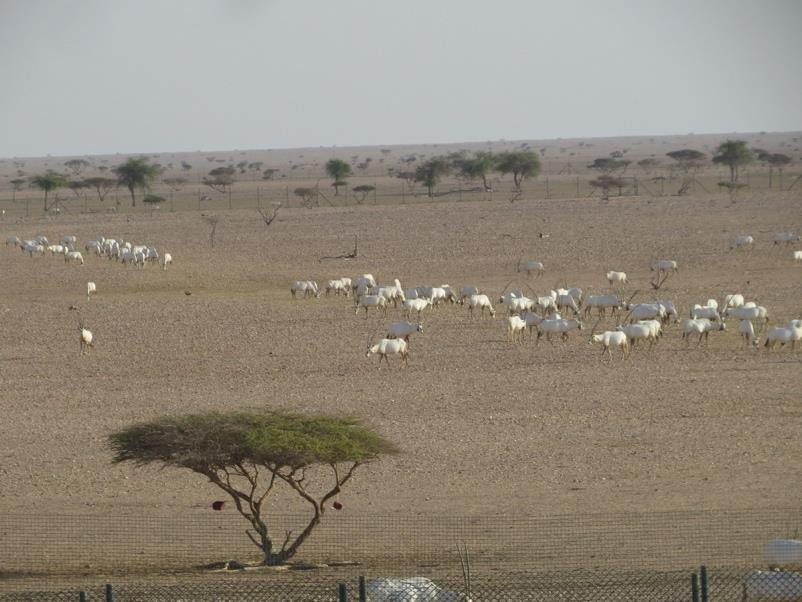
The sanctuary's wildlife breeding centre protects and breeds endangered wild animals, gives health care to injured animals, and prepares wild animals for release back into their natural habitat. The centre also carries out scientific research on wild animals and raises local awareness of the importance of conserving wildlife.

قطيع من المها العربية في سهل المحمية وفي المقدمة شجرة

How to reach the sanctuary

  • From the Wilayat of Haima: take the Haima – Duqm road past the village of Abu Mudabi, heading east for 65 km, then turn left onto the Al Habab dirt road for 48 km.
  • From the Wilayat of Duqm: take the Duqm – Haima road past the Al Ajaiz area for 96 km, then turn right onto the Al Habab dirt road for 48 km.
  • The sanctuary's main gate is on its western side, and the sanctuary centre is 11 km from the gate.

The gateway of Alwusta, where diversity, heritage and opportunities abound.
Phone number: 23430000

Google Play Button
App Store Button
arArabic